

-
AboutShenzhen Century Bailey Environmental Protection Technology Co., Ltd. (referred to as "Century Bailey") is located by the Guanlan Lake of the World Golf Village, adjacent to the Shanshui Tianyuan Tourism and Culture Park. It is a national high-tech enterprise and a specialized and new enterprise focusing on the research, development, production, and sales of catering industry oil fume purification products.
-
ProductShenzhen Century Bailey Environmental Protection Technology Co., Ltd. (referred to as "Century Bailey") is located by the Guanlan Lake of the World Golf Village, adjacent to the Shanshui Tianyuan Tourism and Culture Park. It is a national high-tech enterprise and a specialized and new enterprise focusing on the research, development, production, and sales of catering industry oil fume purification products.
-
Core AdvantagesShenzhen Century Bailey Environmental Protection Technology Co., Ltd. (referred to as "Century Bailey") is located by the Guanlan Lake of the World Golf Village, adjacent to the Shanshui Tianyuan Tourism and Culture Park. It is a national high-tech enterprise and a specialized and new enterprise focusing on the research, development, production, and sales of catering industry oil fume purification products.
-
CasesShenzhen Century Bailey Environmental Protection Technology Co., Ltd. (referred to as "Century Bailey") is located by the Guanlan Lake of the World Golf Village, adjacent to the Shanshui Tianyuan Tourism and Culture Park. It is a national high-tech enterprise and a specialized and new enterprise focusing on the research, development, production, and sales of catering industry oil fume purification products.
-
Customer serviceShenzhen Century Bailey Environmental Protection Technology Co., Ltd. (referred to as "Century Bailey") is located by the Guanlan Lake of the World Golf Village, adjacent to the Shanshui Tianyuan Tourism and Culture Park. It is a national high-tech enterprise and a specialized and new enterprise focusing on the research, development, production, and sales of catering industry oil fume purification products.
-
ContactShenzhen Century Bailey Environmental Protection Technology Co., Ltd. (referred to as "Century Bailey") is located by the Guanlan Lake of the World Golf Village, adjacent to the Shanshui Tianyuan Tourism and Culture Park. It is a national high-tech enterprise and a specialized and new enterprise focusing on the research, development, production, and sales of catering industry oil fume purification products.

Forwarding: Notice from the State Council on Issuing the Action Plan for Continuous Improvement of Air Quality
Release time:
2018-07-04
To continuously and deeply fight the battle for blue skies, effectively protect the health of the people, and promote high-quality economic development through continuous improvement of air quality, this action plan is formulated.

Forwarding: Notice of the State Council on Issuing the Action Plan for Continuous Improvement of Air Quality
https://www.mee.gov.cn/zcwj/gwywj/202312/t20231208_1058492.shtml
Action Plan for Continuous Improvement of Air Quality
This action plan is formulated to continuously and deeply fight the battle for blue skies, effectively protect the health of the people, and promote high-quality economic development through continuous improvement of air quality.
I. Overall Requirements
(1) Guiding Ideology. Guided by Xi Jinping Thought on Socialism with Chinese Characteristics for a New Era, fully implementing the spirit of the 20th National Congress of the Communist Party of China, thoroughly implementing Xi Jinping's ecological civilization thought, implementing the deployment of the National Conference on Ecological and Environmental Protection, adhering to the general work guideline of seeking progress while maintaining stability, and synergistically promoting carbon reduction, pollution reduction, green expansion, and growth. With air quality improvement as the core, focusing on reducing heavy pollution weather and solving prominent atmospheric environmental problems concerning the people, using the reduction of fine particulate matter (PM 2.5 ) concentration as the main line, vigorously promoting the reduction of nitrogen oxides and volatile organic compounds (VOCs); carrying out regional collaborative governance, emphasizing precise, scientific, and law-based pollution control, improving the atmospheric environment management system, and enhancing pollution control capabilities; combining long-term and short-term planning to study and plan the path of atmospheric pollution control, solidly promoting the green and low-carbon transformation of industry, energy, and transportation, strengthening the control of non-point source pollution, strengthening source control, accelerating the formation of a green and low-carbon production and lifestyle, and achieving a win-win situation in environmental, economic, and social benefits.
(2) Key Regions
Beijing-Tianjin-Hebei and surrounding areas. Includes Beijing Municipality, Tianjin Municipality, Shijiazhuang, Tangshan, Qinhuangdao, Handan, Xingtai, Baoding, Cangzhou, Langfang, and Hengshui cities in Hebei Province, as well as Xiong'an New Area and Xinji and Dingzhou cities; Jinan, Zibo, Zaozhuang, Dongying, Weifang, Jining, Tai'an, Rizhao, Linyi, Dezhou, Liaocheng, Binzhou, and Heze cities in Shandong Province; Zhengzhou, Kaifeng, Luoyang, Pingdingshan, Anyang, Hebi, Xinxiang, Jiaozuo, Puyang, Xuchang, Luohe, Sanmenxia, Shangqiu, and Zhoukou cities in Henan Province, as well as Jiyuan City.
Yangtze River Delta region. Includes Shanghai Municipality, Jiangsu Province, Hangzhou, Ningbo, Jiaxing, Huzhou, Shaoxing, and Zhoushan cities in Zhejiang Province, and Hefei, Wuhu, Bengbu, Huainan, Ma'anshan, Huaibei, Chuzhou, Fuyang, Suzhou, Lu'an, and Bozhou cities in Anhui Province.
Fenwei Plain. Includes Taiyuan, Yangquan, Changzhi, Jincheng, Jinzhong, Yuncheng, Linfen, and Lüliang cities in Shanxi Province; Xi'an, Tongchuan, Baoji, Xianyang, and Weinan cities in Shaanxi Province, as well as Yangling Agricultural Hi-tech Industry Demonstration Zone and Hancheng City.
(3) Target Indicators. By 2025, the PM concentration in cities at the prefecture level and above nationwide will decrease by 10% compared to 2020, the ratio of heavily polluted days and above will be controlled within 1%; and the total emissions of nitrogen oxides and VOCs will decrease by more than 10% respectively compared to 2020. In the Beijing-Tianjin-Hebei and surrounding areas and the Fenwei Plain, PM 2.5 concentrations will decrease by 20% and 15% respectively, and the PM concentration in the Yangtze River Delta region will generally meet the standards, with Beijing City controlling it within 32 μg/m³. 2.5 concentrations will decrease by 20% and 15% respectively, and the Yangtze River Delta region PM 2.5 concentration will generally meet the standards, with Beijing City controlling it within 32 μg/m³.
II. Optimizing Industrial Structure and Promoting Green Upgrading of Industrial Products
(4) Resolutely Curbing the Blind Development of High Energy-Consuming, High-Emission, and Low-Level Projects. New, modified, and expanded projects must strictly implement relevant requirements such as national industrial planning, industrial policies, ecological environmental zoning and control plans, planning environmental impact assessments, project environmental impact assessments, energy efficiency reviews, capacity replacement, total control of key pollutants, regional reduction of pollutant emissions, and carbon emission peak targets. Clean transportation methods should be used in principle. For projects involving capacity replacement, the new project can only be put into production after the replaced capacity and its supporting facilities are shut down.
Strictly prohibit the addition of steel production capacity. Promote the integrated layout of steel, coke, and sintering, significantly reduce independent coke, sintering, pellet, and hot rolling enterprises and processes, and eliminate backward coal washing and selection capacity; orderly guide the transformation of blast furnace-converter long-process steelmaking to electric furnace short-process steelmaking. By 2025, the proportion of short-process steelmaking output will reach 15%. The Beijing-Tianjin-Hebei and surrounding areas will continue to implement “coke based on steel”, and the ratio of coke production capacity to long-process steelmaking capacity will be controlled at around 0.4.
(5) Accelerating the Exit of Backward Production Capacity in Key Industries. Revise the Guiding Catalogue for Industrial Structure Adjustment, and study the inclusion of processes and equipment whose pollutant or greenhouse gas emissions are significantly higher than the industry average, and whose energy efficiency and clean production levels are low, into the elimination and restriction lists. Key regions will further improve the requirements for energy consumption, environmental protection, quality, safety, and technology of backward production capacity, gradually phasing out restricted processes and equipment in gas-related industries; gradually eliminating step-by-step sintering machines and pellet vertical furnaces, as well as semi-closed silicon manganese alloy, nickel iron, high-carbon ferrochromium, and high-carbon ferromanganese electric furnaces. Guide the orderly adjustment and optimization of the steel, coke, and electrolytic aluminum industries in key regions.
(6) Fully Carrying Out Upgrading and Transformation of Traditional Industrial Clusters. Cities with a concentration of small and medium-sized traditional manufacturing enterprises should formulate development plans for gas-related industrial clusters, strictly control project approvals, and strictly prevent pollution from spreading to rural areas. Develop special rectification plans for existing industrial clusters, and legally eliminate and shut down a batch, relocate a batch into parks, transform a batch in situ, and optimize and strengthen a batch. Various places should combine the characteristics of industrial clusters and build centralized heating centers, centralized spraying centers, centralized recovery and disposal centers for organic solvents, and centralized regeneration centers for activated carbon in a way that suits local conditions.
(7) Optimizing the Structure of Raw and Auxiliary Materials and Products Containing VOCs. Strictly control the production and use of construction projects with high VOCs content coatings, inks, adhesives, and cleaning agents, and improve the proportion of low (or no) VOCs content products. Implement source substitution projects, and increase the intensity of substitution of low (or no) VOCs content raw and auxiliary materials in industrial coating, packaging printing, and electronics industries. Promote the use of low (or no) VOCs content coatings for outdoor structure protection and urban road traffic signs. Strictly implement VOCs content limit standards in production, sales, import, and use links.
(8) Promoting the Healthy Development of Green and Environmental Protection Industries. Increase policy support, and support the cultivation of a group of leading enterprises in the fields of production and use of low (or no) VOCs content raw and auxiliary materials, VOCs pollution control, ultra-low emissions, and environmental and atmospheric component monitoring. Adopt multiple measures to control the chaos of low-price and low-quality bidding in the environmental protection field, create a fair competitive environment, and promote the healthy and orderly development of the industry.
III. Optimizing Energy Structure and Accelerating Clean, Low-Carbon, and Efficient Energy Development
(9) Vigorously Developing New Energy and Clean Energy. By 2025, the proportion of non-fossil energy consumption will reach about 20%, and the proportion of electricity in terminal energy consumption will reach about 30%. Continue to increase natural gas production and supply, and give priority to ensuring the needs of residents' lives and clean heating for newly added natural gas.
(10) Strictly and reasonably control the total consumption of coal. On the premise of ensuring the safe supply of energy, key regions will continue to implement control over the total consumption of coal. By 2025, the coal consumption in the Beijing-Tianjin-Hebei region and its surrounding areas and the Yangtze River Delta region will decrease by about 10% and 5% respectively compared to 2020, the coal consumption in the Fenwei Plain will achieve negative growth, and non-power coal consumption will be significantly reduced. New, modified, and expanded coal projects in key regions shall implement coal equivalent or reduced substitution in accordance with the law; projects with imperfect substitution plans shall not be approved; the use of high-pollution fuels such as petroleum coke, coke, and lanthanum charcoal shall not be used as a measure to reduce coal consumption. Improve the management measures for coal consumption reduction and substitution in key regions, and exclude gangue and raw material coal from the assessment of total coal consumption. In principle, no more self-owned coal-fired units will be added, and support will be given to the replacement of self-owned coal-fired units with clean energy. Coal-fired power projects and their coal consumption that support stable power supply, grid safety operation, and large-scale grid integration of clean energy should be reasonably guaranteed.
(11) Actively carry out the shutdown and integration of coal-fired boilers. All localities should include coal-fired heating boiler replacement projects in urban heating plans. In principle, no new coal-fired boilers with a capacity of 35 tons of steam per hour or less shall be built in county-level and above urban built-up areas, and in principle, no new coal-fired boilers other than centralized heating shall be built in key areas. Accelerate the construction of heating networks, carry out long-distance heating demonstrations based on power plants and large industrial enterprises, and eliminate coal-fired boilers and scattered coal within the coverage of the heating network. By 2025, cities that have not met the standards will basically eliminate coal-fired boilers of 10 tons of steam per hour or less; key areas will basically eliminate coal-fired boilers of 35 tons of steam per hour or less, as well as tea water boilers, commercial stoves, grain drying equipment, and coal-fired facilities for agricultural product processing, etc., giving full play to the heating capacity of thermal power plants of 300,000 kilowatts or more, and shutting down or integrating coal-fired boilers and backward small coal-fired thermal power units (including self-owned power plants) within a 30-kilometer radius of their heating range. 2.5 Original text
(12) Implement clean energy substitution for industrial kilns. Orderly promote the substitution of electricity for coal, and actively and steadily promote the substitution of gas for coal. No new fuel-type coal gasifiers shall be added in key areas, and new, modified, and expanded heating furnaces, heat treatment furnaces, drying furnaces, and melting furnaces shall, in principle, use clean and low-carbon energy; safely and steadily promote the replacement of industrial kilns using high-pollution fuels with industrial waste heat, electricity, natural gas, etc.; fuel-type coal gasifiers shall be replaced with clean energy, or decentralized use methods can be adopted in a localized manner; gradually eliminate fixed-bed intermittent coal gasifiers.
(13) Continuously promote clean heating in northern regions. Promote clean heating in northern regions in a targeted and planned manner to ensure that people have a warm winter. Increase the intensity of replacing scattered coal for civilian and agricultural use, basically eliminating scattered coal in the plain areas of key regions, and gradually promoting the replacement of scattered coal with clean energy in mountainous areas. Cities included in the central government's support for clean heating in northern regions shall complete the transformation tasks with guaranteed quality and quantity, and "coal-to-gas" replacement must be based on gas supply. Comprehensively improve the building energy efficiency level and accelerate the energy-saving transformation of existing rural houses. All localities shall, in accordance with the law, designate areas that have completed the overall clean heating transformation as high-pollution fuel prohibition zones to prevent the resurgence of scattered coal. For areas that have not yet implemented clean heating, strengthen the quality supervision of commodity coal.
IV. Optimize the transportation structure and vigorously develop a green transportation system
(14) Continuously optimize and adjust the freight transportation structure. For long-distance transportation of bulk goods, priority should be given to railway and waterway transportation, and for short-distance transportation, priority should be given to enclosed belt conveyors or new energy vehicles and ships. Explore the use of clean transportation as a key focus for the review and supervision of new, modified, and expanded projects in industries such as coal mining, steel, thermal power, non-ferrous metals, coking, and coal chemical industry. Municipalities directly under the Central Government and provincial capital cities in key regions shall adopt "external collection and internal distribution" logistics methods such as combined rail and road transportation. By 2025, the volume of railway and waterway freight transportation will increase by about 10% and 12% respectively compared to 2020; among the long-distance transportation (over 500 kilometers) of coal and coke in the main coal-producing areas of Shanxi, Shaanxi, Inner Mongolia, and Xinjiang, the proportion of railway transportation will strive to reach 90%; the proportion of clean transportation (including new energy vehicles) of iron ore, coke, etc., in key regions and major coastal ports in the Guangdong-Hong Kong-Macao Greater Bay Area will strive to reach 80%.
Strengthen the construction of railway dedicated lines and intermodal transportation facilities, maximize the effectiveness of existing lines, and in principle, simultaneously plan the construction of port railways when building new container and bulk cargo handling areas in important port areas; expand the railway transportation capacity of existing handling areas. Carry out suitable cargo transformation of railway stations in key urban areas. New and relocated logistics parks, industrial and mining enterprises, and coal storage bases with an annual transportation volume of 1.5 million tons or more of bulk goods shall, in principle, be connected to dedicated railway lines or pipelines. Strengthen measures to ensure land and sea use, acceptance and commissioning, transportation capacity allocation, and railway freight rates.
(15) Accelerate the improvement of the clean level of motor vehicles. In key regions, the proportion of new energy vehicles in newly added or updated public buses, taxis, urban logistics distribution vehicles, and light sanitation vehicles shall not be less than 80%; accelerate the elimination of gas-powered trucks using lean-burn technology. Promote Shanxi Province, Inner Mongolia Autonomous Region, and Shaanxi Province to build pilot leading areas for clean transportation and cultivate a number of clean transportation enterprises. Promote the use of new energy medium and heavy-duty trucks in the power generation, steel, coal, coking, non-ferrous metals, and cement industries and logistics parks, and develop zero-emission freight fleets. Strive to achieve a coverage rate of fast-charging stations at key regional expressway service areas of no less than 80% by 2025, and no less than 60% in other areas.
Strengthen the supervision and spot checks of newly produced trucks to achieve full family coverage. Strengthen road inspections and household inspections of heavy-duty trucks. Fully implement the vehicle emission inspection and maintenance system and the motor vehicle emission recall system, and strengthen the supervision and law enforcement of annual inspection institutions. Encourage cities in key regions to conduct fuel evaporation emission control tests.
(16) Strengthen the comprehensive control of non-road mobile sources. Accelerate the new energy transformation and upgrading of operating vehicles and machinery inside railway freight yards, logistics parks, ports, airports, and industrial and mining enterprises. Promote the development of new energy and clean energy ships and improve the utilization rate of shore power. Vigorously promote the elimination of old railway locomotives and encourage the promotion of new energy railway equipment in central cities' railway stations and industries such as coal, steel, and metallurgy. By 2025, basically eliminate the phenomenon of "black smoke" from non-road mobile machinery, ships, and railway locomotives in key regions, and basically eliminate non-road mobile machinery with emission standards of the first stage and below; airports with an annual passenger throughput of 5 million or more will have a shore power utilization rate of 95% or more.
(17) Comprehensively ensure the quality of refined oil products. Strengthen the supervision of the entire process of oil product import, production, storage, sales, transportation, and use, comprehensively clean up and rectify self-built oil tanks, mobile refueling vehicles (ships), and black refueling stations, and resolutely crack down on acts such as selling non-standard oil products as engine fuel. Increase the frequency of diesel sampling tests in the fuel tanks of trucks, non-road mobile machinery, and ships, trace the sources of discovered clues, and severely pursue the main responsibilities of relevant producers, sellers, and transporters.
V. Strengthen the control of non-point source pollution and improve the level of refined management
(18) Deepen the comprehensive management of dust pollution. Encourage economically developed areas to install video surveillance on construction sites of 5,000 square meters or more and connect them to local regulatory platforms; implement segmented construction for long-distance linear projects such as roads and water conservancy in key areas. Include dust pollution prevention and control costs in the project cost. By 2025, the proportion of prefabricated buildings in newly built buildings will reach 30%; the mechanization cleaning rate of roads in urban built-up areas in cities at the prefecture level and above will reach about 80%, and in county towns about 70%. Investigate and file records of urban public bare land and take dust prevention measures. The construction of dust suppression facilities and the closed transformation of material transportation systems in urban large coal, ore and other dry bulk terminals will be basically completed.
(19) Promote the comprehensive management of the ecological environment of mines. Newly built mines should, in principle, simultaneously build dedicated railway lines or adopt other clean transportation methods. By 2025, in principle, no new open-pit mines will be built in the Beijing-Tianjin-Hebei region and its surrounding areas (except for key mining areas determined by provincial-level mineral resource planning or those that are not suitable for underground mining methods after safety assessment). Mines that still fail to meet the standards after a time-limited rectification shall be closed down in accordance with the law based on requirements for safety production, soil and water conservation, and ecological environment.
(20) Strengthen the comprehensive utilization and ban on straw burning. Improve the standardization and standardization level of straw returning to fields. Improve the straw collection, storage, and transportation service system, enhance industrialization capabilities, and improve off-field efficiency. The comprehensive utilization rate of straw nationwide will remain above 86%. All localities should make specific provisions and precise divisions on the scope of straw burning ban based on their actual conditions. Open-air burning of straw is prohibited in key areas. Comprehensive use of satellite remote sensing, high-definition video monitoring, drones and other means to improve the accuracy of straw burning fire point monitoring. Improve the grid management system, give full play to the role of grassroots organizations, and conduct special inspections during key periods of straw burning.
VI. Strengthen the reduction of multiple pollutants and effectively reduce emission intensity
(21) Strengthen the comprehensive management of VOCs throughout the entire process and all links. Encourage the use of low-leakage breathing valves and emergency pressure relief valves for storage tanks, and conduct regular sealing tests. Promote the use of sealed quick connectors for tank trucks. High-concentration organic waste gas in wastewater treatment sites should be collected and treated separately; organic waste gas from storage tanks, devices, and sumps (pools) containing VOCs-containing organic wastewater should be sealed and collected for treatment. In key areas, cities with concentrated petrochemical and chemical industries and key industrial parks will establish a unified leakage detection and repair information management platform by the end of 2024. During the start-up, shutdown, and maintenance of enterprises, promptly collect and treat VOCs waste gas generated from operations such as material discharge, cleaning, and purging. Enterprises shall not use flare combustion devices as daily atmospheric pollution treatment facilities.
(22) Promote in-depth treatment of pollution in key industries. High-quality promotion of ultra-low emission transformation of key industries such as steel, cement, coking, and coal-fired boilers. By 2025, more than 80% of the national steel production capacity will complete the ultra-low emission transformation; key areas will all achieve ultra-low emission in the steel industry and basically complete the ultra-low emission transformation of coal-fired boilers.
Ensure that industrial enterprises achieve stable and compliant emissions. Promote in-depth treatment of industries such as glass, lime, mineral wool, and non-ferrous metals. Conduct a comprehensive investigation of simple and inefficient pollution control facilities for boilers and industrial kilns, and implement classified disposal through clean energy substitution, upgrading and transformation, and integration and withdrawal. Promote low-nitrogen combustion transformation of gas boilers. Biomass boilers use special boilers, equipped with bag filters and other efficient dust removal facilities, and prohibit the co-firing of coal, domestic waste and other materials. Promote the integration of small biomass boilers, and actively guide the ultra-low emission transformation of biomass boilers (including electricity) in urban built-up areas. Strengthen the operation and maintenance of pollution control facilities and reduce abnormal operating conditions emissions. Key gas-related enterprises will gradually cancel bypasses for flue gas and VOCs-containing waste gas; those that cannot be cancelled due to safety production needs shall install online monitoring systems and backup treatment facilities.
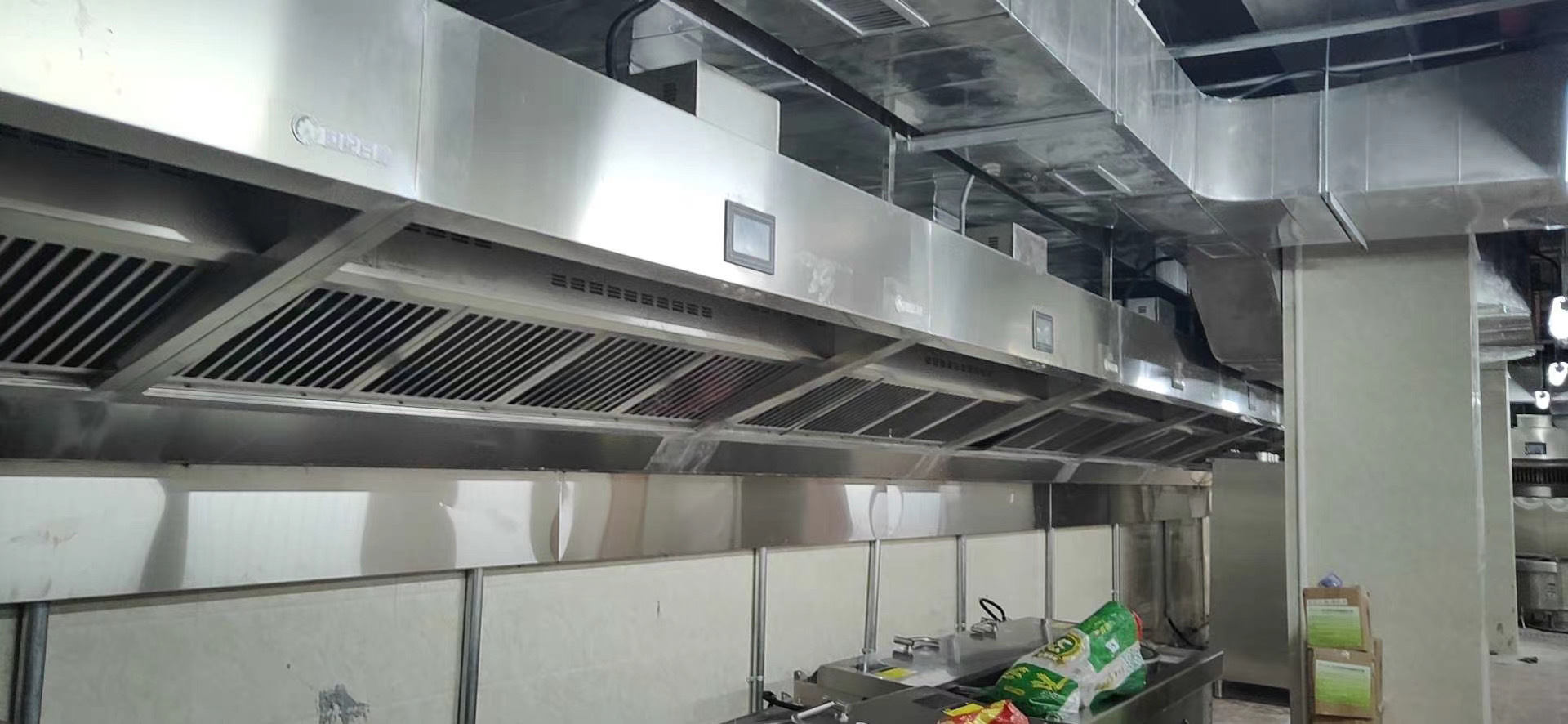
(23) Carry out special governance of catering oil fume and odor nuisance. Strictly manage the layout of catering service units near residential buildings. Buildings that plan to open catering service units should be designed and constructed with dedicated smoke ducts. Promote the implementation of third-party operation and maintenance management and online monitoring of treatment facilities in areas with conditions. Strengthen the investigation and rectification of odor nuisance problems that have strong public complaints, and industrial parks and key enterprises with concentrated complaints should install and operate online monitoring systems. All localities should strengthen inter-departmental coordination and solve the problems of oil fume and odor nuisance that are concentrated in public complaints in a way that suits local conditions.
(24) Steadily promote the prevention and control of atmospheric ammonia pollution. Carry out pilot projects for atmospheric ammonia emission control in the Beijing-Tianjin-Hebei region and its surrounding areas. Promote the mechanical deep application of nitrogen fertilizer and low-protein diet technology. Research on ammonia and other odor control measures for livestock and poultry farms, encourage closed management of pig and chicken houses, support closed transportation, storage and treatment facilities for manure, and strengthen waste gas collection and treatment. By 2025, the total amount of atmospheric ammonia emissions from large-scale livestock and poultry farms in the Beijing-Tianjin-Hebei region and its surrounding areas will decrease by 5% compared with 2020. Strengthen the governance of atmospheric ammonia emissions from industries such as nitrogen fertilizer and soda ash; strengthen the prevention and control of ammonia escape from flue gas desulfurization and denitrification in industrial sources.
VII. Strengthen mechanism building and improve the atmospheric environment management system
(25) Implement urban air quality compliance management. Municipalities directly under the Central Government and cities at the prefecture level whose air quality does not meet the standards shall formulate and implement plans for achieving atmospheric environmental quality standards within a time limit, clarify the roadmap and key tasks for achieving standards, and make them public. Promote the synergistic control of PM 2.5 and ozone. In 2020, PM 2.5 concentration is lower than 40 μg/m³ in cities that have not met the standards will achieve the standards during the 14th Five-Year Plan period; other cities that have not met the standards will clarify the phased goals for air quality improvement during the 14th Five-Year Plan period. Cities that have already met the standards will consolidate and improve air quality.
(26) Improve the regional cooperation mechanism for atmospheric pollution prevention and control. The state will comprehensively promote the joint prevention and control of atmospheric pollution in the Beijing-Tianjin-Hebei region and its surrounding areas, and continue to give play to the role of the cooperation mechanism in the Yangtze River Delta region and the Fen-Wei Plain. The state will strengthen guidance on the cooperation in atmospheric pollution prevention and control in the Chengdu-Chongqing region, the Yangtze River Middle Reaches City Cluster, the Northeast region, and the Tianshan North Slope City Cluster, and will take the Guangdong-Hong Kong-Macao Greater Bay Area as a pilot demonstration area for air quality improvement. Provincial governments will strengthen joint prevention and control within their administrative regions. Encourage cities and counties in inter-provincial border areas to actively carry out joint prevention and control and promote joint cross-border law enforcement. For newly built projects in key gas-related industries within 20 kilometers on both sides of the provincial boundary, and newly built high-altitude source projects that have a large impact on the air quality downwind, relevant provinces should conduct consultations on the consistency of environmental impact assessments.
(27) Improve the mechanism for responding to heavy pollution weather. Establish and improve a three-level emergency response plan system for heavy pollution weather at the provincial, municipal, and county levels, clarify the responsibilities of various government departments at all levels, and standardize the work procedures for issuing, responding to, and lifting heavy pollution weather warnings. Optimize the criteria for issuing heavy pollution weather warnings. Improve the performance grading index system for key industrial enterprises, standardize the enterprise performance grading management process, and encourage the implementation of performance level improvement actions. In conjunction with the pollutant discharge permit system, ensure that the emergency emission reduction list covers all gas-related enterprises. Cities in the same region should adopt emergency response measures synchronously in accordance with the regional warning information in accordance with laws and regulations.
VIII. Strengthen capacity building and strictly enforce law enforcement supervision
(28) Enhance air environment monitoring and surveillance capabilities. Improve the urban air quality monitoring network, basically achieving full coverage of county towns, and strengthening data interconnection and sharing. Improve the sandstorm investigation and monitoring system, and strengthen the construction of meteorological and air quality monitoring networks in sand source areas and sandstorm paths. Key regional cities should strengthen air environment monitoring in airports, ports, railway freight yards, logistics parks, industrial parks, industrial clusters, and highways. Non-methane hydrocarbon monitoring should be carried out in cities at the prefecture level and above, and photochemical monitoring should be carried out in key areas, the Chengdu-Chongqing region, the Yangtze River Midstream City Cluster, and other cities with high VOCs emissions. Key areas and other cities that have not met the standards should continue to conduct particulate matter component monitoring. Strengthen the construction of air environment monitoring capabilities using a series of satellites, aviation, and ground-based remote sensing. Improve the air quality grading forecasting system and strengthen the construction of regional forecasting centers. Carry out Asian regional sandstorm monitoring, forecasting, and early warning services and technological research and development. Conduct sandstorm source spectrum monitoring and analysis in sandstorm path areas, focusing on Beijing to analyze sandstorm sources, and evaluate the amount of sand and dust and the effectiveness of sand fixation and sand retention in various places. 2.5 Cities at the prefecture level and above should regularly update the list of key atmospheric pollution emission units, ensuring full coverage of eligible enterprises. Promote the installation of operating condition monitoring, electricity (energy) consumption monitoring, and video surveillance by enterprises. Strengthen the construction of mobile source environmental management capabilities. National and key provincial regions should build remote online monitoring platforms for heavy-duty diesel vehicles and non-road mobile machinery.
(29) Strengthen air environment supervision and law enforcement. Expand the application of non-site supervision methods. Strengthen the supervision of the operation of pollution source automatic monitoring equipment to ensure data quality and stable transmission. Improve the law enforcement and monitoring capabilities of environmental protection departments at all levels. Key regional cities and counties should accelerate the deployment of equipment such as infrared thermal imagers, portable hydrogen flame ionization detectors, and handheld photoionization detectors. Strengthen supervision and law enforcement in key areas, and pursue legal responsibility for polluting units, third-party institutions, and individuals involved in falsification; those suspected of crimes should be transferred to judicial organs according to law.
(30) Strengthen decision-making technological support. Research low-concentration, high-volume, and small and medium-sized VOCs emission pollution control technologies to improve the effectiveness and stability of key functional adsorption and catalytic materials for VOCs. Research the clean energy substitution and end-of-pipe treatment paths for various types of industrial kilns, and develop technologies and equipment for multi-pollutant system treatment, low-temperature denitrification, and precise control of ammonia escape. Promote research on the identification of odorous substances, odor pollution assessment, and source tracing technologies and methods. Carry out research on the mechanism of sandstorm weather generation and development. By 2025, cities at the prefecture level and above will complete the compilation of emission inventories, and key regional cities will achieve annual updates.
IX. Improve the legal, regulatory, and standard system, and improve environmental economic policies
(31) Promote the amendment and revision of laws and regulations. Study and initiate the revision of the Air Pollution Prevention and Control Law. Study and revise the Clean Production Promotion Law, clarifying the legal responsibilities of enterprises using raw and auxiliary materials with low (or no) VOCs content. Study and formulate management measures for mobile source pollution prevention and control.
(32) Improve the environmental standards and technical specifications system. Initiate research work on the revision of environmental air quality standards and related technical specifications. Study and formulate mandatory national standards for VOCs content limits for coatings, polyurethane resins, household detergents, and insecticidal aerosols, establish a product labeling system for low (or no) VOCs content products; formulate technical requirements for activated carbon used in organic waste gas treatment; accelerate the improvement of emission standards, energy consumption standards for atmospheric pollutants in key industries and fields. Study and formulate the next-stage motor vehicle emission standards, and conduct research on new-stage oil quality standards. Study and formulate mandatory national standards for the quality of biomass molded fuels, pollutant emissions from railway internal combustion locomotives, etc. Encourage local governments to formulate stricter environmental standards.
(33) Improve the price, tax, and fee incentive and constraint mechanism. Implement peak and valley time-of-use electricity pricing policies and promote sales electricity price reforms. Strengthen the coordination of price policies with industrial and environmental protection policies, comprehensively consider energy consumption and environmental protection performance levels, and improve the tiered electricity price system for high energy-consuming industries. Implement supportive electricity price policies for port shore-based power supply and promote the reduction of shore power service fees. Encourage local governments to provide positive support for the charging of new energy city public buses and electric vehicles. Study and improve the peak and valley electricity price system for clean heating "coal-to-electricity" and heating electricity sales; reduce the number of levels of urban gas transmission and distribution, reasonably formulate and strictly regulate transmission and distribution gas prices, establish and improve a linkage mechanism between terminal sales prices and procurement prices, and implement clean heating gas price policies. Improve the flexible adjustment mechanism for railway freight rates, standardize railway freight miscellaneous fees, study the implementation of "one-price" charging policies, widely adopt "quantity-price mutual protection" agreement transportation models, improve the environmental protection tax collection system, and accelerate the inclusion of VOCs into the scope of collection.
(34) Actively play the guiding role of fiscal and financial resources. Orderly expand the scope of central government financial support for clean heating in northern regions, and give priority to projects that synergistically reduce pollution and carbon emissions. Increase credit financing support for the upgrading of traditional industries and clusters, industrial pollution control, construction of railway dedicated lines, and promotion of new energy railway equipment in a market-oriented manner, and guide social capital investment. Conduct green finance evaluations of banking financial institutions as required, attract long-term institutional investors to invest in green financial products. Actively support eligible enterprises and financial institutions in issuing green bonds, conduct green bond credit ratings, and improve the information disclosure level of green bonds.
X. Implement the responsibilities of all parties and launch a nationwide campaign
(35) Strengthen organizational leadership. Adhere to and strengthen the Party's overall leadership over air pollution prevention and control. Local governments at all levels are responsible for the air quality within their administrative regions and organize the formulation of local implementation plans. The Ministry of Ecology and Environment should strengthen overall coordination and conduct scheduling and evaluation. Relevant departments of the State Council should cooperate to implement task assignments and consider the continuous improvement of air quality when issuing policies.
(36) Strict supervision and assessment. The completion of air quality improvement targets will be used as an important content for the assessment of the effectiveness of the in-depth battle against pollution prevention and control. Regions that exceed the targets will be rewarded; regions that fail to meet the targets will be punished in terms of fund allocation, project approval, honorary awards, and accountability; and special inspections will be organized for regions with prominent problems. Organize supervision and assistance for key areas.
(37) Promote information disclosure. Strengthen the disclosure of environmental air quality information. Include the falsification of polluting units and third-party governance, operation and maintenance, and testing agencies in credit records and publish them to the public regularly according to law. Key polluting units should promptly publish self-monitoring and pollution emission data, pollution control measures, environmental violations and penalties, and rectification information. Motor vehicle and non-road mobile machinery production and import enterprises shall legally disclose environmental protection information such as emission testing and pollution control technology.
(38) Strengthen publicity and guidance and international cooperation. Widely publicize and interpret relevant policies and measures, vigorously popularize basic concepts and knowledge of atmospheric environment and health, and improve citizens' awareness and health literacy of atmospheric environmental protection. Strengthen international cooperation in atmospheric environment management and sand prevention and control. Promote China's atmospheric pollution control technologies and experience, practical technologies and models for sand prevention and control, and tell the story of China's ecological and environmental protection.
(39) Implement a nationwide campaign. Mobilize all sectors of society to participate widely in atmospheric environmental protection. Governments should take the lead in conducting green procurement and comprehensively use products with low (or no) VOCs content. Improve the reporting reward mechanism and encourage the public to actively provide clues about environmental violations. Central enterprises should take the lead in guiding green production and promoting pollution control and emission reduction. Strengthen citizens' environmental awareness and promote the formation of a simple, moderate, green, low-carbon, and civilized and healthy lifestyle to jointly improve air quality.
Shenzhen Century Bailey mainly engages in the independent research and development of large-scale catering
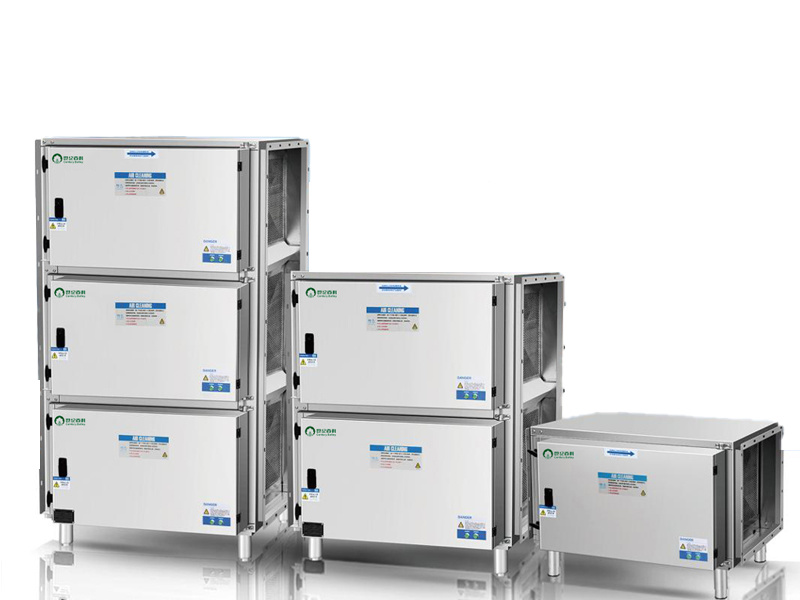
Oil smoke purifier Oil smoke purifier ,油烟净化机 ,oil fume purification equipment, Century Bailey Oil fume purification integrated machine 。This company's self-developed new generation of wet oil fume purification integrated machines, UV photolysis oil fume purifiers, and dynamic physical interception oil fume purifiers meet the needs of different customers. Simplified traditional Oil smoke purification system, improved equipment reliability, and far exceeded national emission standards. Company website: www.szbailey.com
More news


Hotline:+86 136 849 29821
Email:13684929821@139.com
Address:No. 6, Junzibubujun Industrial Road, Guanlan, Longhua New District, Shenzhen


