

-
AboutShenzhen Century Bailey Environmental Protection Technology Co., Ltd. (referred to as "Century Bailey") is located by the Guanlan Lake of the World Golf Village, adjacent to the Shanshui Tianyuan Tourism and Culture Park. It is a national high-tech enterprise and a specialized and new enterprise focusing on the research, development, production, and sales of catering industry oil fume purification products.
-
ProductShenzhen Century Bailey Environmental Protection Technology Co., Ltd. (referred to as "Century Bailey") is located by the Guanlan Lake of the World Golf Village, adjacent to the Shanshui Tianyuan Tourism and Culture Park. It is a national high-tech enterprise and a specialized and new enterprise focusing on the research, development, production, and sales of catering industry oil fume purification products.
-
Core AdvantagesShenzhen Century Bailey Environmental Protection Technology Co., Ltd. (referred to as "Century Bailey") is located by the Guanlan Lake of the World Golf Village, adjacent to the Shanshui Tianyuan Tourism and Culture Park. It is a national high-tech enterprise and a specialized and new enterprise focusing on the research, development, production, and sales of catering industry oil fume purification products.
-
CasesShenzhen Century Bailey Environmental Protection Technology Co., Ltd. (referred to as "Century Bailey") is located by the Guanlan Lake of the World Golf Village, adjacent to the Shanshui Tianyuan Tourism and Culture Park. It is a national high-tech enterprise and a specialized and new enterprise focusing on the research, development, production, and sales of catering industry oil fume purification products.
-
Customer serviceShenzhen Century Bailey Environmental Protection Technology Co., Ltd. (referred to as "Century Bailey") is located by the Guanlan Lake of the World Golf Village, adjacent to the Shanshui Tianyuan Tourism and Culture Park. It is a national high-tech enterprise and a specialized and new enterprise focusing on the research, development, production, and sales of catering industry oil fume purification products.
-
ContactShenzhen Century Bailey Environmental Protection Technology Co., Ltd. (referred to as "Century Bailey") is located by the Guanlan Lake of the World Golf Village, adjacent to the Shanshui Tianyuan Tourism and Culture Park. It is a national high-tech enterprise and a specialized and new enterprise focusing on the research, development, production, and sales of catering industry oil fume purification products.
Inventory of the 8 most common oil fume purification equipment and processes on the market
Release time:
2017-05-30
Overview of the 8 most common types of kitchen oil fume purifiers and their processes: Kitchen oil fume exhaust treatment devices are oil fume purifiers. The national standard for oil fume purification in the food service industry is GB18483-2001 <Food Service Industry Oil Smoke Emission Standard>. All such products must obtain national environmental protection product certification

The device for handling kitchen oil fume waste gas is an oil fume purifier. The national standard for oil fume purification in the food service industry is
Inventory of the 8 most common oil fume purifier equipment and processes on the market
1. Oil fume collection hood
Uses a simple hood to collect oil fume, and then uses an exhaust fan to exhaust the oil fume outdoors. Only collects oil fume, no purification treatment, oil fume removal rate is 0%.
2. Water-carrying fume hood
Uses alkaline solution as a detergent, and purifies the oil fume through spraying, then collects and discharges it through an exhaust fan.
The oil fume removal rate of the best current products is about 30~40%. The oil fume removal rate does not meet the requirements of
3. Water spray scrubbing tower purification process
Uses a fume hood to collect and send it to an absorption tower (spraying, sieve plate, packing) for purification, and then discharges it through an exhaust fan.
The oil fume removal rate of this product is about 80~90%. The oil fume removal rate meets the requirements of GB18483-2001. However, the equipment requires a large installation space and a complex system.
4. High-voltage electrostatic (plasma)
Utilizes gas ionization and electric field force under high voltage to separate dust particles after charging from the gas.
The oil fume removal rate of this product is nominally 95%. The oil fume removal rate of 95% in the first week of use meets the requirements of GB18483-2001, but the removal rate decreases linearly to zero after about 3 months of continuous use. To ensure the oil fume purification effect and meet the oil fume removal rate standard, it must be cleaned every two weeks. Professional electrostatic oil fume purifier cleaning service companies can do this, costing between 1000 and 5000 yuan each time. If not cleaned according to specifications, the exhaust pipe will accumulate serious oil, and the risk of fire is very high.
5. Physical filtration
One or several combinations of wire mesh, activated carbon, and steel wire.
The actual oil fume removal rate of this type of product is 20~30%, and it cannot meet the requirements of GB18483-2001 when used alone. It is easy to clog and needs to be cleaned weekly.
6. Photocatalysis
Uses ultraviolet light to decompose the oil mist in the oil-containing gas.
The oil fume removal rate of this product can reach 90%, meeting the requirements of GB18483-2001, provided that a pipe of at least about 30 meters long is needed for easy installation of ultraviolet lamps. Currently, only imported ultraviolet lamps can guarantee the reliability and durability of the product. The downside is that ultraviolet light is carcinogenic, and it must be tightly sealed; if it leaks, it won't benefit anyone. By the way, a little leakage can sterilize and disinfect.
7. Biopurification
Uses oil-loving microorganisms to decompose and purify the oil mist in the oil fume.
The oil fume removal rate of this product can reach 90%, meeting the requirements of GB18483-2001. It requires a special microbial pool, and the microbial metabolism needs to be regularly processed and updated. This treatment method is the most environmentally friendly.
8. Liquid droplet washing
Utilizing the double-film theory of mass transfer, a combination of physical and chemical methods, a mechatronics product, strictly speaking, it should not be called an oil fume purifier, but should be called Oil fume purifier More reasonable.
The oil fume removal rate of this product can reach 90%, meeting the requirements of GB18483-2001. It uses a special cleaning agent to improve the mass transfer driving force of the two phases of gas and liquid, which can quickly capture oil fume and other particles in the gas phase; at the same time, it uses the negative pressure of its own exhaust fan to generate a liquid droplet layer of about 600 mm thick (liquid droplet diameter 1.5 mm) to perform washing purification on the oil fume gas. It is approximately equivalent to the purification effect of a 600-meter natural rainfall layer. The oil removal rate in oil fume is 90%, the black smoke particulate removal rate is 90%, the removal rate of dust and other impurities in the air is 90%, the removal rate of various odors is 70%, and the removal rate of blue smoke (chemical gel) is 60%. The product needs to be drained and professional cleaning agents added every 2-3 days of use. The product is stable in operation, has a long service life, and is fireproof.
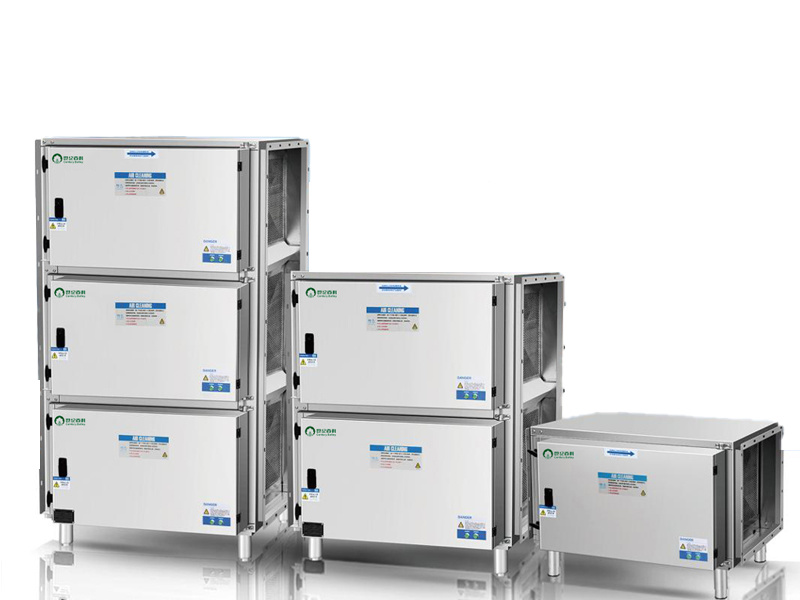
Shenzhen Century Bailey mainly engages in independently researched and developed large-scale catering industry Oil fume purifier , Oil fume purifier Oil fume purification equipment, Century Bailey Oil fume purification integrated machine Our company's independently developed new generation of wet oil fume purification integrated machines, UV photolysis oil fume purifiers, and dynamic physical interception oil fume purifiers meet the needs of different customers. It simplifies the traditional Oil fume purification System, improves the reliability of equipment operation, and is far higher than the national emission standards. Company website: www.szbailey.com
More news



Hotline:+86 136 849 29821
Email:13684929821@139.com
Address:No. 6, Junzibubujun Industrial Road, Guanlan, Longhua New District, Shenzhen


